In-Cabin Range-Doppler Simulations for Breathing Detection
Project Overview:
This project focuses on in-cabin range-Doppler simulations for detecting breathing rate—especially for children in cars—using radar and electromagnetic simulation. The goal is to enable vital-sign monitoring (breathing) in vehicle cabins for safety and health applications. The work ties into neural network methods for breathing anomaly detection from synthetic radar returns.
Approach:
- Range-Doppler simulation — Simulate radar returns from a breathing subject in a cabin environment; range-Doppler processing isolates the breathing signature from clutter.
- In-cabin geometry — Cabin and occupant geometry (e.g. child in car seat) are modeled; breathing motion is animated (e.g. via Blender or similar pipelines) and run through the simulation.
- Detection of breathing rate — From the simulated (or measured) returns, breathing rate and anomalies can be inferred; this feeds into CNN-based detection (see linked paper below).
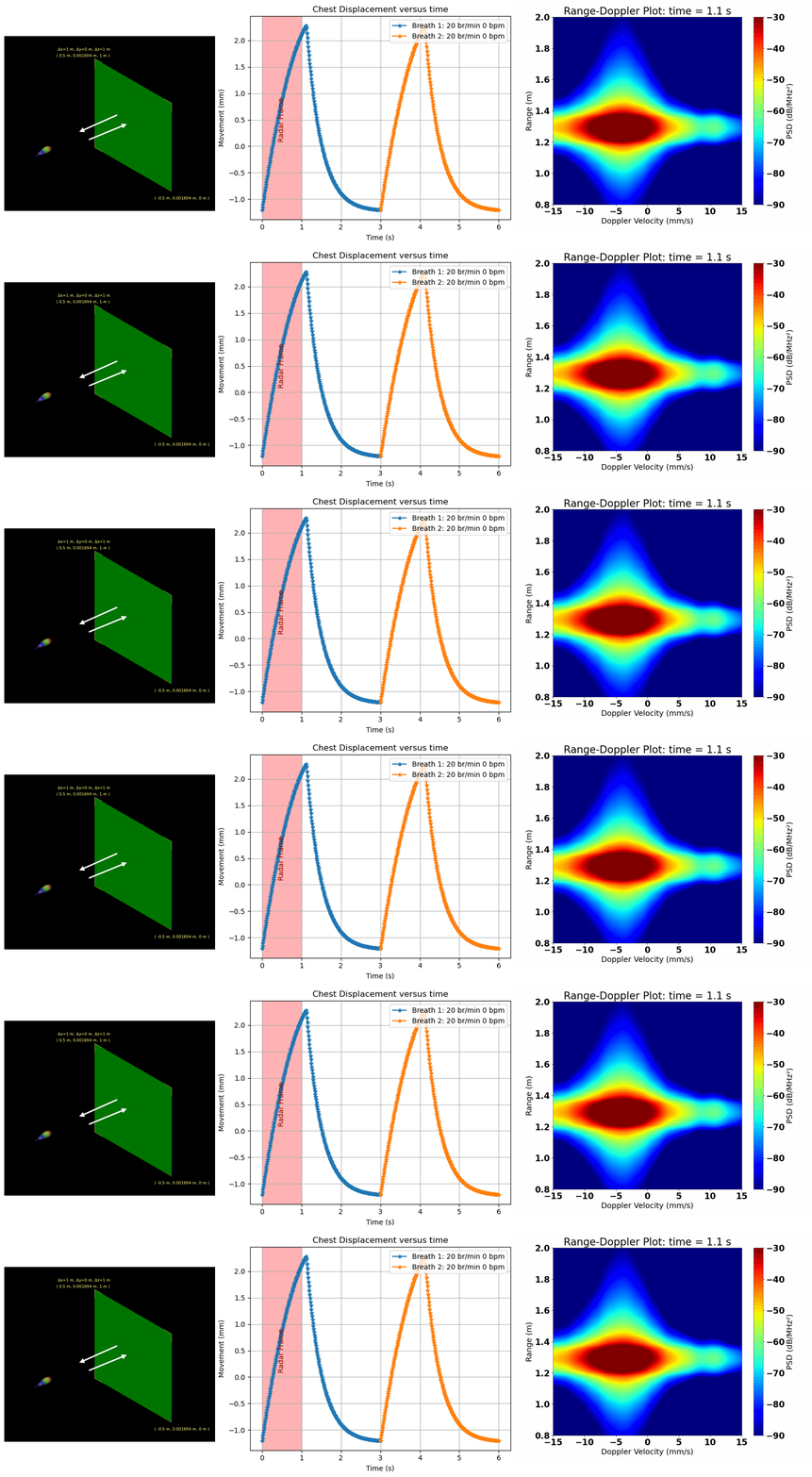 Range-Doppler visualization for in-cabin breathing.
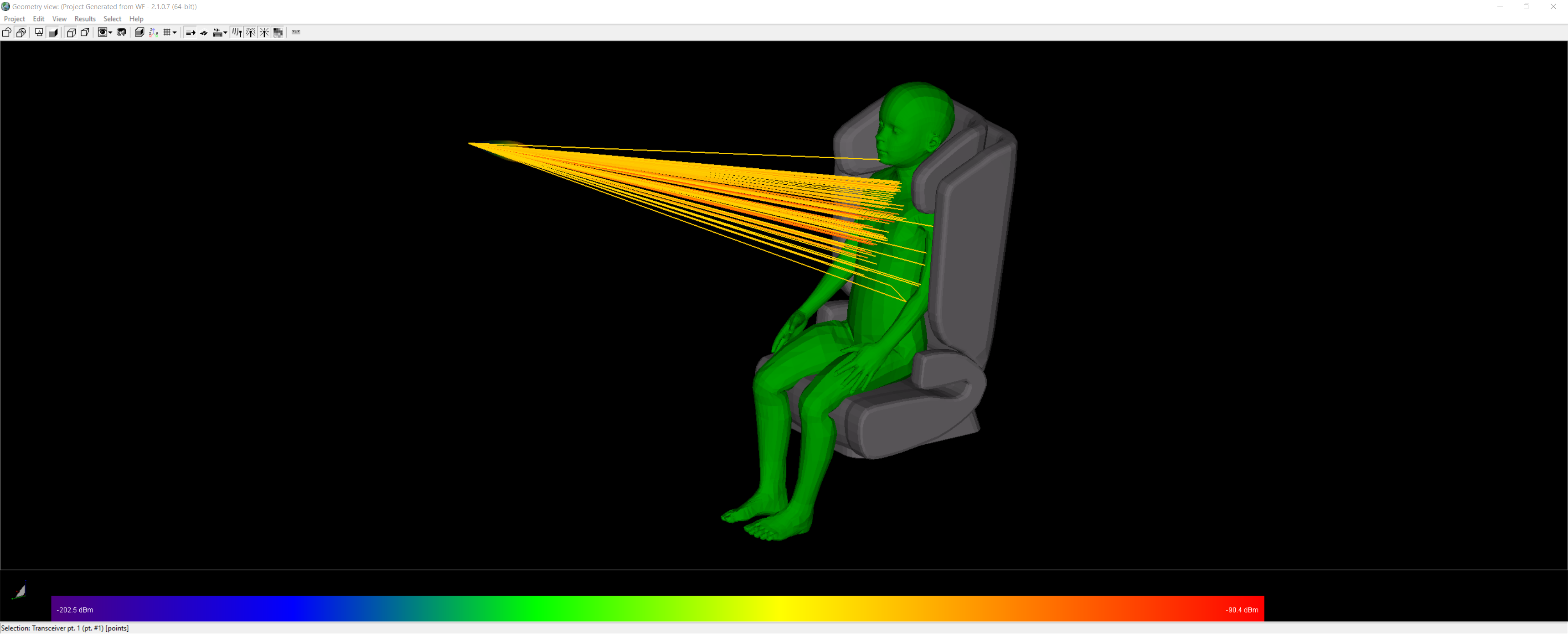 Simulation paths and cabin geometry.
Related research
For the neural network side—synthetic radar return-based detection of breathing anomalies—see:
Synthetic Radar Return-Based Neural Network for Detecting Breathing Anomaly (PDF).
That work uses synthetic breathing waveforms and radar phase data to train a CNN for detecting abnormal breathing patterns; the in-cabin range-Doppler setup provides a realistic scenario for such signals.